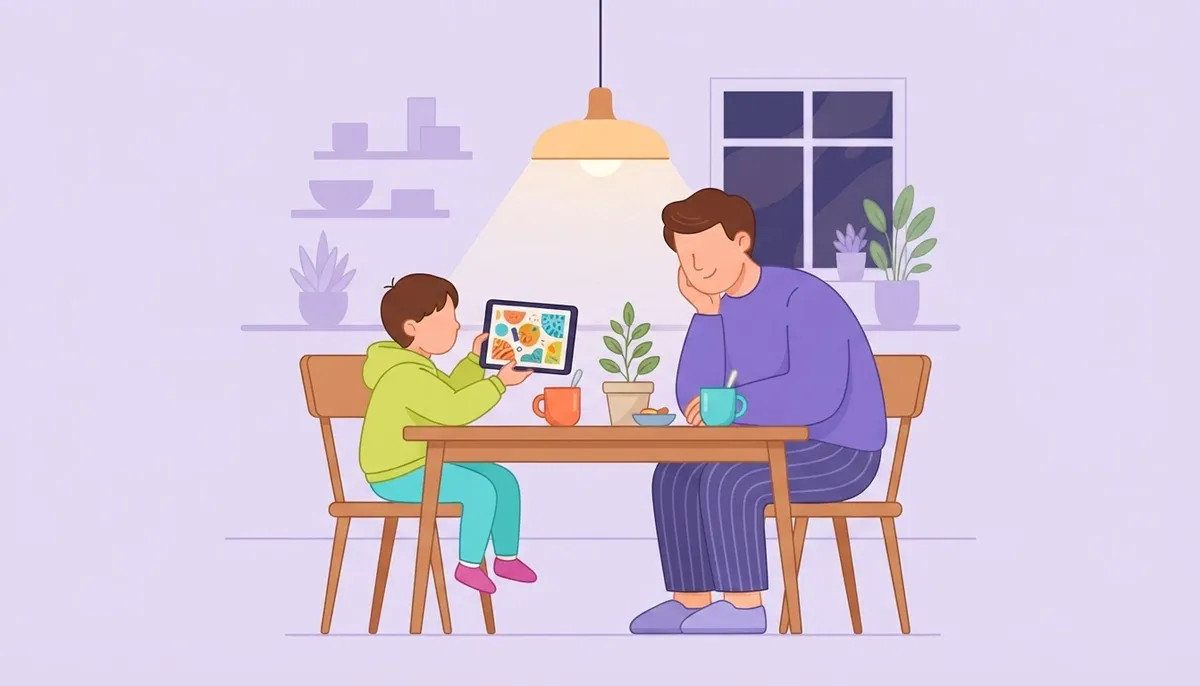
Learning doesn't stop at the school gate, and it never has. The question asked over dinner, the "you haven't opened that course in a week, everything okay?", the parent who notices a streak and says something kind about it, those moments are part of how a child learns, not a pleasant extra on the side. Yet most learning software treats parents as either an afterthought who gets a report card at the end of term, or a notification target to be flooded with alerts until they stop reading. We think both are wrong, and this post is about what we believe a parent actually needs from the loop, and what teloriva does, and deliberately doesn't do, to give it to them.
The loop most platforms leave half-open
Picture the usual shape of a learning product. The student works through lessons. The teacher, or the tutor, sees the results: who's behind, who's stuck, what needs reteaching. That's a closed loop between two people, and it's a genuinely useful one. But there's a third person in almost every child's education who sits outside it, the one who is actually there at 7pm on a Tuesday when the homework either happens or doesn't.
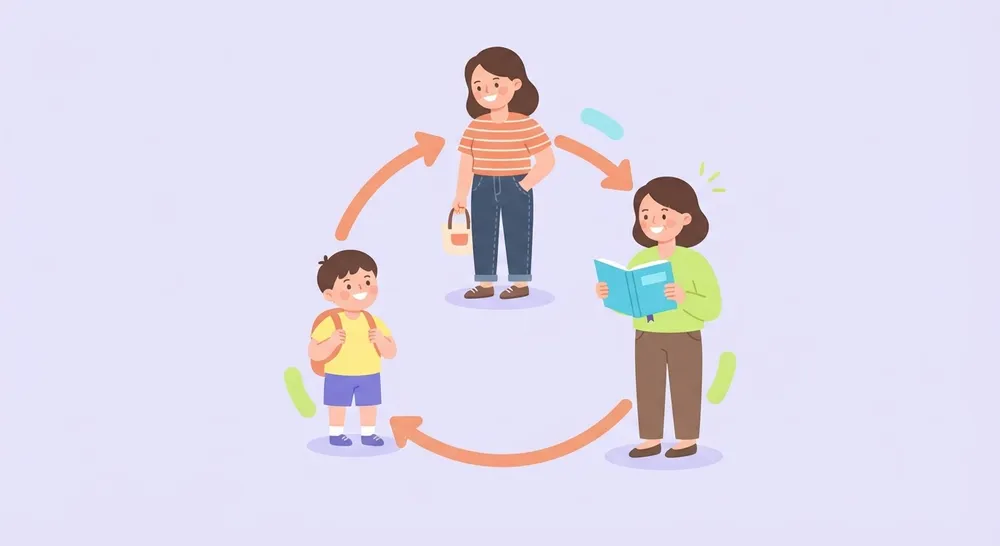
When the parent is left out, the information they get arrives late and flattened. A term report says "needs to focus more on fractions" three months after the fractions unit ended. By then the moment where a parent could have helped, simply by asking about it, sitting nearby, or noticing that their child had quietly stopped logging in, has long passed. A half-open loop isn't neutral. It means the adult with the most daily contact has the least useful information.
What the research is fairly clear on
We're going to be careful here, because "parental involvement improves outcomes" is one of those sentences that gets stretched to cover almost anything. The broad direction of the research on family engagement is fairly consistent, though: what seems to help most isn't parents drilling their children or checking every answer, it's parents who show interest, hold expectations, and help build routine. Talking about what a child is learning, making space and time for it, and treating it as something that matters at home too.
That distinction matters for how a product should be designed. If the useful thing a parent does is ask a good question and notice when a routine slips, then the parent needs a small amount of timely, honest information. They don't need a live feed of every wrong answer. A tool that turns parents into homework police can easily make things worse, both for the child's motivation and for the relationship around learning at home.
Signal, not surveillance
So what should a parent actually see? Our answer is a deliberately short list. In teloriva's parent panel, each child gets a card with a handful of numbers: how many pieces of homework are still pending, how many courses they're actively enrolled in, their points, their current daily streak, and when they last started a lesson. That's it, and it's on purpose.
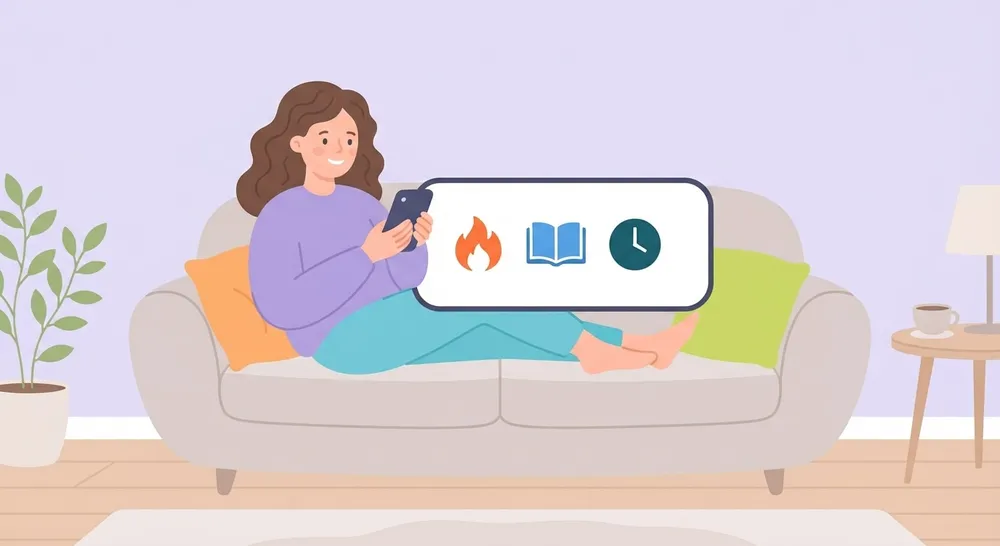
Each of those answers a question a parent can do something warm and useful with. Is there homework waiting? Ask about it. When did they last do a lesson? If it's been a while, that's a conversation, not a crisis. Is the streak alive? Say something about it. None of them requires the parent to understand a mastery model or interpret a probability, and none of them turns a child's individual mistakes into something a parent is expected to monitor.
What parents don't see matters just as much. We don't show parents per-concept mastery estimates or the adaptive engine's routing decisions. That data exists, and it's valuable, but it's working evidence for a teacher or tutor planning what comes next, not a scoreboard for the kitchen table. We wrote at length about why class-level signals shouldn't be dressed up as individual judgments, and the same instinct applies here: give each person the information that fits their role, and don't blur it for a more impressive dashboard. We also don't currently send parents emailed digests or weekly reports. The panel is somewhere a parent chooses to look, not something that chases them.
Linking is consent, not a backdoor
The other half of "parents in the loop" is how a parent gets into it, and here we think the details are the whole story.
There are two ways a parent can be connected to a child in teloriva. A family can create a child's account themselves, in which case that login, its history and its learning space belong to the family, and the parent can edit or remove it. Or a learner who already has their own account can link a guardian from their own Family page, sharing a code that the parent uses to connect. In that second case the account is not the parent's to change. A parent can see the same summary card, and can unlink, but cannot edit or delete an account that someone else owns. And unlinking really removes the connection. It isn't a hidden status flag that keeps access alive in the background.
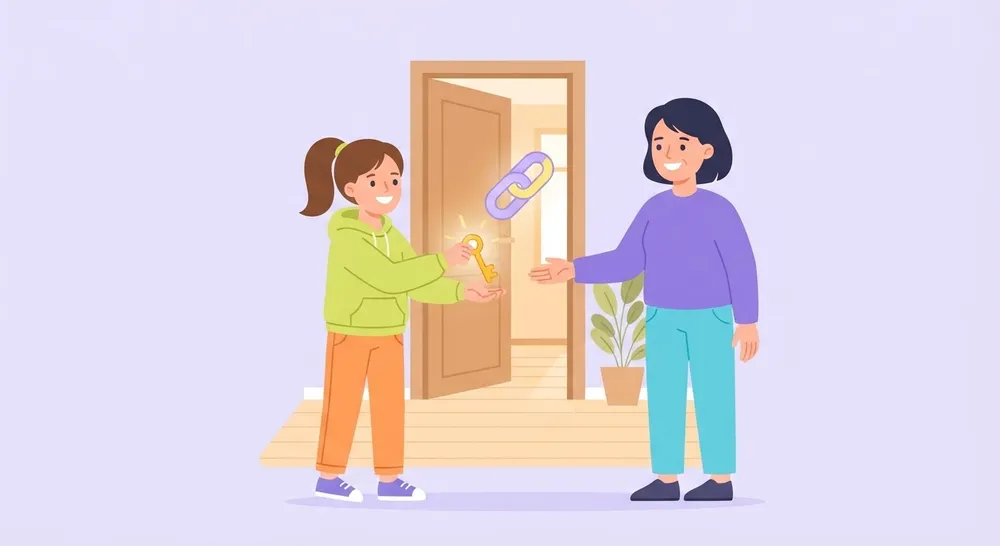
That might sound like a technical nicety. It isn't. A parent's view of a child's learning should come from an explicit, visible link that both sides can see, not from being quietly attached through a school roster the child never knew about. The learner can see who is linked to them. That visibility is what makes it a loop rather than a one-way window.
Small, regular, warm
If you're a parent reading this, here's the practical version, and none of it needs software.
Ask about the lesson, not the score. "What was today's lesson about?" invites an explanation, and explaining something is one of the best ways to learn it. "What did you get?" invites a number and, often, a shrug.
Notice routine before results. A missed week is easier to fix than a failed test, and a gentle "haven't seen you do a lesson since Sunday" lands very differently from a disappointed look at a grade later.
Celebrate the streak, not perfection. Consistency is what moves learning forward, and it's also the thing a child can control. We've written about why points and badges alone plateau, and the same holds at home: recognition works best when it's about effort that's actually in the child's hands.
And yes, we put a small nudge in the product for this. Parents have their own daily streak on the panel, and they earn their own rewards when their children complete lessons and make things in the Studio. It's a light touch, but it makes the point we care about.
In a healthy learning loop, the parent isn't the inspector at the end. They're a participant the whole way through.
The loop, closed properly
A student learns. A teacher sees the evidence and decides what's next. A parent sees just enough to ask a good question at the right time. None of the three is watching the others, and each one gets the information that fits the job they're actually doing. That's not a bigger dashboard. It's a better-shaped one.
Want to see what the parent side looks like from the inside? Explore teloriva for families →